


You picked a model. The workflow ran. Classification was clean, the outputs were structured, and your team stopped copy-pasting between tabs.
Then the vendor shipped a new version.
And the thing that worked last quarter started returning garbage.
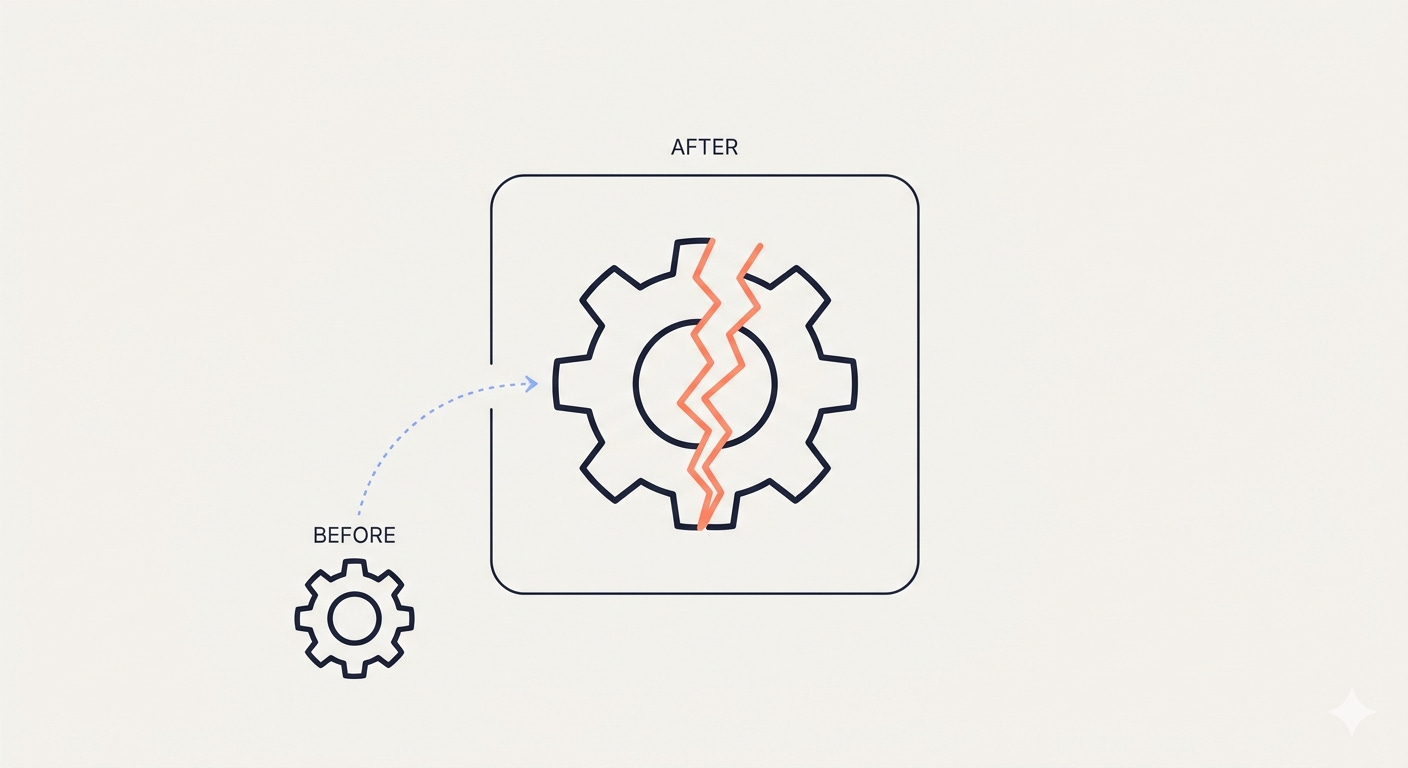
Last month, my friend, an operations leader named Priya, messaged me. Her team had settled on an AI model, built it into their support workflow, and shipped it. A few weeks later, she wrote again: ‘It started giving us garbage, but nobody touched the code. What do you think is going on here?’
She’d asked the questions everyone asks up front: Which model is best? ChatGPT or Claude? Which one’s cheaper? She hadn’t asked the question that decides whether a model keeps working: what happens when OpenAI or Anthropic releases a new version.
She started worrying three weeks in. You should start on day one.
In case you’re new here, here are some past TDL articles you may have missed:
I Built an AI Agent That Sends Me My Numbers Every Monday Morning → A step-by-step n8n build that takes an agent from inventing your metrics to reading them from a live Google Sheet, remembering context, recovering from failed steps, and reporting on its own every Monday, all running free on a local model.
Prompt Engineering.: Treating LLM Prompts as Software Assets → Why ad-hoc prompting breaks once three engineers touch the same string and a model update degrades your outputs; and, how versioning, structured evaluation, cost tracking, and drift monitoring turn prompt management into a boring, solved problem.
n8n. local. → A 30-minute build that gets a private AI agent running free on your own laptop with n8n, Ollama, and Docker, no API keys and no model weights leaving your machine, ready to take on a recurring job your team already does.
Version churn is the breakage nobody prices in
When a vendor ships an update, the model starts behaving differently.
When the company that makes your model releases a new version, the same prompt and settings you tested can start returning answers in a different format, or skipping details it caught before. Operations leads and analysts have watched a support classifier that sorted tickets cleanly on one version start mislabelling them on the next. A model that read a 40-page contract end-to-end last quarter now skips the middle pages and summarises only what it saw at the beginning and the end.
You changed nothing in your code. The vendor changed the model, and your results changed with it.
So the question worth asking is how the model behaves when OpenAI or Anthropic updates it on their schedule.
That question rarely comes up before a team commits.
Cost is the same trap wearing a different coat
Breakage has a financial twin: the bill.
Token billing means your spend scales with use, and use scales the moment the workflow works, and the team starts to depend on it. Operators report the bill arriving like a surprise, because the thing that made the tool valuable, everyone using it, is the same thing that made it costly.
Both fears come from one root:
You committed to a model without a way to judge what you were committing to.
How Experienced Operators Pick a Model They Can Trust for a Year.
Experienced operators care less about which model is cleverest and more about which one they can rely on month after month. They’ve learned that the model that scores highest on a benchmark today isn’t always the one that still sorts your support tickets correctly after the vendor updates it.
They choose durability over dazzle.
The model that tops the benchmark this week and the model still working in your stack a year from now are often two different models. You learn which one you’ve got by running it on your own work, watching what it costs as your team uses it more, and seeing how it behaves when the vendor updates it next.
Your instinct is right. The framework is what’s missing.
So your hesitation looks like timidity. It’s good judgment, you just don’t have a way to act on it yet.
The teams that commit fastest are often the ones who get stranded, because they chose on capability alone and never asked what happens when the vendor updates the model. The teams that hesitate are right to fear getting locked into a model that breaks; they just have no structured way to test for it.
What you need is a way to test a model before you commit, one that weighs how it handles vendor updates, what it costs as your team uses it more, and how narrow the job is, rather than how impressive its answers look in the first demo.
So this week I’m walking through the choice live, in two parts.
Wednesday, June 10th, 8:30 AM EST, live: Pick an LLM You Won’t Regret. I’ll walk through a clear set of checks for choosing a model. How to read a version string so you know what you’re committing to, what a model costs as your team uses it more, and whether your task is narrow enough to catch a bad answer fast. You’ll leave with a way to choose instead of a guess.
On Thursday, we’ll go one level deeper, into the answer that takes the update schedules of OpenAI, Anthropic, and Google out of your hands for good: Fine-Tune and Deploy an LLM Without an ML Engineer. You decide when to update, instead of waking up to a vendor’s change you didn’t choose. Your weights, your control, start to finish.
Wednesday tells you which model to trust. Thursday hands you the build where you stop living by a vendor’s release calendar.
Choose the version after this one, not the demo in front of you.
This is the part nobody prices in. You tune prompts to a model’s quirks, the next version fixes those quirks, and your clever workflow quietly breaks. What’s held up for me is building on stable interfaces and treating prompts as replaceable, not sacred. Does the piece get into versioning?